
Introduction
Are you a professional in the global development sector, a manager, policymaker, or social entrepreneur seeking to drive real change? This guide is designed for you. In today’s rapidly evolving landscape—marked by climate shocks, shifting donor priorities, and the integration of AI—leadership for development is more critical than ever. Leadership for development refers to the unique set of skills and approaches required to guide social, economic, and environmental transformation in complex, real-world contexts. Leadership is a critical factor in the success of development programs, shaping not only project outcomes but also the long-term sustainability and impact of initiatives.
For professionals, managers, and policymakers, understanding and investing in leadership for development is essential. The skills needed to lead development work in 2026 look vastly different from those required even five years ago. Whether you’re running a social enterprise in Phoenix or managing a community health initiative in Nairobi, effective leadership is the linchpin for navigating uncertainty and achieving meaningful, lasting change.
This guide provides a practical roadmap for understanding, building, and measuring leadership for development—the kind that produces sustainable impact rather than just impressive reports.
Key Takeaways
Leadership for development centers on guiding social, economic, and environmental transformations amid real-world complexities like the UN Sustainable Development Goals, climate crises, and persistent inequality.
Effective development leaders blend technical expertise with collaborative, community-centered approaches and long-term systems thinking—moving beyond the “heroic leader” model toward networked, adaptive leadership.
Structured leadership development programs consistently improve project outcomes. Research from the Center for Creative Leadership shows organizations with mature programs respond 86% more rapidly to unpredictable environments compared to 52% for those with less developed ones.
By 2026, organizations expect leaders to handle AI integration, climate risk, and cross-sector partnerships as standard elements of development work, highlighting the importance of partnership and collaborative relationships in cross-sector leadership for development.
This article walks through how to assess leadership needs, design learning experiences, build global and local networks, and measure progress on leadership initiatives that drive real change.
To maximize impact, leaders should start implementing change by applying new leadership skills immediately in the workplace, ensuring that development efforts translate into tangible results from the outset.
Introduction to Leadership Development
Leadership development is a critical factor in driving success and economic growth within the global development sector. As organizations face increasingly complex development challenges, the need for effective leadership development programs has never been greater. These programs are designed to cultivate the practical skills and broader perspective required to navigate the evolving landscape of development issues, from climate change to shifting donor priorities.
What is Leadership for Development?
Leadership for development is explicitly defined as a critical factor in the success of development programs. It encompasses the cultivation of leadership skills and mindsets that enable individuals and organizations to implement real change, foster innovation, and create sustainable impact in the development sector. Leadership is a critical factor in the success of development programs, ensuring that organizations remain resilient and adaptive in the face of complex challenges.
Why Leadership Development Matters
Developing leadership skills goes beyond traditional management training. It equips future leaders with the knowledge and understanding necessary to implement real change, foster innovation, and create sustainable impact. By focusing on both the skills needed for today’s challenges and the ability to anticipate future trends, leadership development ensures that organizations remain resilient and adaptive.
A strong leadership pipeline is essential for any organization aiming to succeed in the development sector. Leadership development programs provide a structured approach to talent development, enabling organizations to identify, nurture, and empower emerging leaders. This investment not only strengthens internal capacity but also contributes to broader economic growth and good governance across communities.
Ultimately, leadership development is about more than individual advancement—it’s about building teams and organizations that can drive success, respond to complex development issues, and create lasting, positive change. By prioritizing leadership development, organizations position themselves to meet the demands of the future and make a meaningful impact in the global development sector.
Transition: Now that we’ve established the importance of leadership for development, let’s review the key takeaways that will guide our exploration of this topic.
What “Leadership for Development” Really Means in 2026
Leadership for development refers to leading efforts in international development, community uplift, and public-good innovation aligned with initiatives like the UN’s 2030 Agenda for Sustainable Development. Since the SDGs launched in 2015, the global development sector has shifted expectations dramatically. Leaders today must understand not just project management, but power dynamics, inequality reduction, and participatory decision-making in challenging contexts. Developing leadership skills is essential for championing positive social transformation in a global context.
Comparing Corporate and Development Leadership
Corporate Leadership | Leadership for Development |
|---|---|
Focus on profit maximization and shareholder returns | Prioritizes ethical stewardship, resource allocation in constrained environments, and cultural sensitivity |
Driven by business metrics and financial KPIs | Driven by social impact, equity, and sustainable outcomes |
Operates in relatively stable environments | Operates in volatile, resource-constrained, and diverse contexts |
Top-down decision-making | Emphasizes participatory, community-centered approaches |
Global frameworks like the Paris Agreement on climate action and the African Union’s Agenda 2063 shape what funders, governments, and communities expect from those steering development initiatives.
Leadership for development is also increasingly cross-sector. It spans NGOs, social enterprises, local governments, and impact-focused businesses. An entrepreneur tackling affordable housing in Arizona faces similar leadership challenges to someone scaling youth employment programs in Nairobi—balancing stakeholder interests, managing scarce resources, and building trust across cultural divides. The urgency is clear: uneven SDG progress shows that some regions advance through proactive leadership while others lag due to inadequate coordination.

Transition: Understanding what leadership for development means sets the stage for identifying the core competencies that effective leaders need in this sector.
Core Competencies of Effective Development Leaders
Credentials alone don’t make effective development leaders. What matters is a specific set of competencies that translate knowledge into action across complex, often volatile environments.
Systems Thinking
Development challenges rarely exist in isolation. A 2025 urban water project in Phoenix, for example, requires understanding how drought conditions, affordability concerns for underserved communities, utility infrastructure, and local policy all interconnect. Leaders with systems thinking can see these relationships and design interventions that address multiple factors simultaneously.
Political Savvy
Navigating stakeholder power imbalances is essential. In Sub-Saharan African agriculture programs, leaders frequently mediate tensions between international donors with specific reporting requirements and local governments with different priorities. Reading these dynamics and building coalitions separates successful projects from failed ones.
Ethical Stewardship
Developing leaders must allocate resources equitably, often with limited budgets and high stakes. In Southeast Asian disaster recovery, this means ensuring inclusive budgeting that doesn’t favor connected elites over marginalized communities.
Community Engagement
The shift from top-down development to participatory approaches demands leaders who can facilitate genuine co-creation. U.S. tribal economic initiatives demonstrate how consulting communities as partners rather than beneficiaries produces more sustainable outcomes.
Adaptive Leadership
When COVID-19 disrupted education projects between 2020 and 2022, leaders who pivoted quickly to hybrid models sustained enrollment while others saw participation collapse. Development contexts change fast, and rigid planning often fails.
Data-Informed Decision-Making
From predicting school dropout hotspots to targeting drought interventions, leaders increasingly use analytics to guide strategy. This doesn’t mean replacing judgment with algorithms—it means combining quantitative evidence with local knowledge.
Cross-Cultural Communication
Whether working with multicultural social enterprises in Arizona or coordinating across tribal consultations, development colleagues must build trust across cultural divides. The University of Manchester’s leadership curriculum emphasizes these skills as foundational for global contexts.
Transition: With these core competencies in mind, let’s explore how leaders can apply them in complex development environments.
Leading Change in Complex Development Environments
Development contexts in 2026 remain volatile. Conflicts disrupt supply chains. Climate shocks like Southwestern U.S. droughts reshape entire program strategies. Donor priorities shift with political cycles. Leaders must manage this uncertainty while keeping teams focused on long-term goals.
In this environment, there is a shared responsibility among leaders, particularly with the integration of AI, to foster growth, resilience, and strategic decision-making.
Balancing Short-Term and Long-Term
A 12-month livelihoods project delivering immediate income gains serves different purposes than a decade-spanning poverty reduction strategy. Both matter. Effective leaders maintain dual focus—hitting near-term deliverables while building toward systemic change. During COVID-19, education leaders who shifted to hybrid models didn’t just maintain enrollment; they developed new skills and infrastructure that strengthened programs for years afterward.
Inclusive Practices That Build Ownership
Resistance to development initiatives often stems from communities feeling excluded from decisions affecting their lives. Co-creation workshops, participatory budgeting, and youth councils counter this dynamic. Research suggests locally-led initiatives experience up to 30% lower failure rates. When Arizona entrepreneurs pivoted water security projects amid 2022-2025 funding cuts, those who incorporated local business partnerships found more sustainable paths forward.
Learning from Real Adaptations
The pattern is clear: leaders who treat change as expected rather than exceptional perform better. Organizations with mature leadership development programs show 86% rapid response capability versus 52% for those without structured approaches. This isn’t about predicting every disruption—it’s about developing leaders who can navigate whatever comes.
Transition: To build these capabilities, organizations need intentional, well-designed leadership development programs. Let’s look at how to design such programs for maximum impact.
Designing a Leadership for Development Program
Building a leadership pipeline requires intentional design, not ad hoc training sessions. Whether you’re leading a small nonprofit or a regional public agency, the process follows similar steps. Leadership development programs should align with the organization’s business priorities to be effective.
Steps to Design a Leadership for Development Program
Align with Mission and Business Priorities: Start by ensuring your leadership program directly supports your organization’s mission and business priorities, such as reducing rural poverty by 2030 or improving water security in drought-prone regions.
Diagnose Needs: Conduct a focused assessment to identify leadership gaps.
Define Target Audiences: Segment by role (e.g., field coordinators, program managers, policy advocates, impact investors).
Set Learning Outcomes: Establish clear, measurable goals.
Select Learning Methods: Choose formats that fit your context and bandwidth.
Plan Integration with Real Projects: Ensure learning is embedded in actual work.
The proven 70-20-10 framework works well for development settings:
70% on-the-job challenges
20% mentoring and peer learning
10% formal coursework
A two-year internal program for mid-level managers at a regional development agency might combine virtual modules with field pilots, structured mentoring from senior leaders, and quarterly peer learning sessions.

Assessing Leadership Needs in Development Organizations
Assessing leadership needs within an organization is crucial before investing in training programs. Before investing in leadership development programs, run a focused assessment. Use surveys, 360° feedback from team members and stakeholders, and project reviews from the past two to three years to identify gaps.
Segment your analysis by role:
Field coordinators may need stronger adaptive leadership skills
Program managers often require political savvy and stakeholder management
Policy advocates benefit from systems thinking
Impact investors need ethical decision-making frameworks
Capture data on where projects stumble. Do initiatives fail during stakeholder conflicts? Budget overruns? Scaling challenges? These patterns reveal which leadership behaviors need strengthening.
Involve board members, funders, and community representatives in defining priorities—not just HR or senior staff. Arizona housing projects that experienced budgeting overruns, for example, needed input from local partners to identify the real leadership gaps.
Transition: Once you’ve assessed your organization’s leadership needs, the next step is to set clear goals and outcomes for your leadership development program.
Setting Goals and Outcomes for Leadership for Development
Convert your needs analysis into three to five clear goals. Examples include:
Improved cross-agency collaboration by end of 2027
Higher project completion rates
Stronger community trust scores
Reduced project delays by 20%
Specify changes at three levels:
Level | Example Outcome |
|---|---|
Individual behavior | Better facilitation skills, improved conflict resolution |
Team performance | Faster decision cycles, increased collaboration |
Organizational results | Higher impact per dollar invested, 70% locally-led initiatives |
Use SMART goals that connect directly to development outcomes tracked in monitoring frameworks. When leadership training produces 15% better health or education metrics in a district, you can demonstrate clear return on investment.
Transition: With clear goals in place, it’s important to choose learning experiences that are practical and relevant to your development context.
Choosing Learning Experiences that Work in Development Settings
Mix learning formats based on context and bandwidth limitations:
Online modules for foundational knowledge, accessible asynchronously
Live virtual discussions for peer exchange across geographies
In-person retreats for deeper relationship building and complex skill practice
Field-based projects that test new skills in real conditions
Embed real problems rather than hypothetical exercises. A stalled 2024 sanitation project makes a better case study than an invented scenario. Pair emerging leaders across regions—a Phoenix-based social entrepreneur with a Nairobi program manager facing similar challenges creates mutual learning opportunities.
Simulations help build confidence for high-stakes situations:
Humanitarian coordination
Budget negotiations with donors
Community conflict mediation
Design learning journeys of 6 to 24 months that combine these elements progressively.
Transition: After designing your program and selecting learning experiences, the next step is to ensure new leadership skills are practiced and embedded on the job.
Practising and Embedding New Leadership Skills on the Job
Leadership training fails when it stays theoretical. Developing leadership skills requires testing them in active projects with real stakes and real feedback.
Organizations can assign stretch assignments—leading a pilot climate-resilient agriculture initiative in 2026, for example—as structured development opportunities. Pair these with coaching from senior leaders or external advisors who understand development finance, policy, and community engagement.
After-action reviews, learning diaries, and reflection sessions capture lessons from both success and failure. The key is psychological safety: allowing leaders to experiment without punitive responses when innovation doesn’t immediately succeed. FranklinCovey research highlights that emotional resilience and collaborative dynamics emerge when organizations create space for learning from mistakes.
Using Real-World Projects as Learning Labs
Select two to three ongoing projects per year as “learning labs” where emerging leaders can practice new methods:
Participatory design approaches
Adaptive planning techniques
Conflict resolution strategies
Appoint one participant as learning lead, responsible for documenting practices and sharing insights across the organization. A 12-month pilot testing inclusive economic development planning in an Arizona city—involving small businesses and nonprofits—bridges classroom concepts with field realities.
Connect learning labs to external partners like universities, municipal governments, or community cooperatives. This broader perspective helps future leaders understand how different stakeholders approach similar challenges.
Leveraging Technology and Data in Leadership for Development
Technology enables rather than replaces human leadership. Leaders in 2026 increasingly use:
Low-bandwidth learning platforms accessible in remote areas
Mobile surveys for rapid community feedback
GIS mapping to visualize project coverage and gaps
Simple dashboards to track key indicators
AI and predictive analytics help target interventions—forecasting drought risk or identifying school dropout hotspots before problems escalate. But responsible use requires attention to data privacy and avoiding reinforcement of existing inequalities.
Regular “data walks” where teams and community members jointly interpret visualizations keep technology grounded in local knowledge. The goal is combining quantitative insights with understanding that only comes from relationships and presence.
Transition: Practicing new skills is vital, but building strong networks is equally important for leadership success in development.
Building Global and Local Networks for Development Leadership
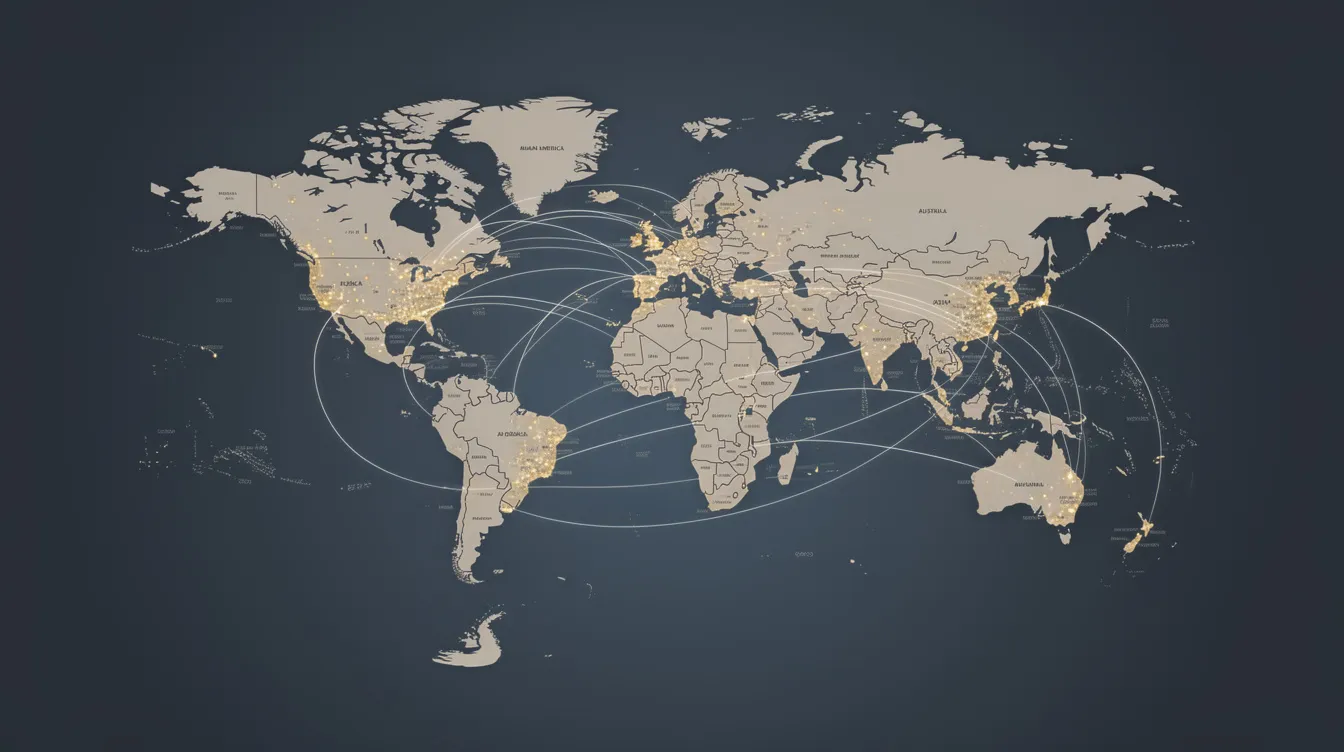
Effective leadership for development depends on networks that span cities, countries, and sectors. No single organization has all the answers.
Global peer communities—alumni of programs from two world class institutions, fellowship networks, practitioner coalitions focused on food security or youth employment—provide broader perspective and fresh ideas. A global network connects you to lessons from contexts you’ll never directly experience.
Local networks matter equally. Community elders, small-business owners, faith leaders, and municipal officials influence real change on the ground. These relationships take time to build but determine whether initiatives succeed or fail.
Cultivate networks intentionally through:
Regional learning events
Virtual roundtables on specific challenges
Cross-country project exchanges
Cross-Sector Collaboration: Government, Business, and Civil Society
Leadership for development often means orchestrating collaboration between ministries, private sector companies, NGOs, and citizen groups. Each brings different resources, constraints, and incentives.
Practical tactics include:
Shared planning workshops that surface different priorities early
Joint monitoring frameworks with agreed metrics
Co-branded community outreach that signals unified commitment
Public-private partnerships for affordable housing or joint ventures for renewable energy adoption in desert states demonstrate what’s possible when sectors align. Trust-building requires transparent communication, especially when corporate partners’ incentives differ from nonprofit or public sector actors.
In the next 12 months, leaders can make concrete moves:
Invite a private sector partner to a planning session
Propose shared metrics with a government agency
Co-host a community event with another organization working on similar development issues
Mentorship, Role Models, and Storytelling
Stories from experienced development leaders ground abstract theory in real struggles. Someone who scaled a community health initiative between 2018 and 2024 can share lessons no textbook captures.
Set up formal mentorship programs matching emerging leaders with practitioners from different geographies and sectors. The combination of external perspective and sector-specific understanding accelerates growth.
Create internal story libraries—short videos, written case notes, or podcasts—sharing lessons from projects that succeeded and failed. This narrative infrastructure builds organizational memory and helps new leaders learn from their development colleagues’ experience.
Younger leaders especially seek role models who demonstrate integrity, humility, and community accountability. The senior director who admits mistakes publicly and shows how they learned creates permission for others to take risks.
Transition: Building networks and partnerships is crucial, but measuring the impact of leadership initiatives ensures ongoing improvement and accountability.
Measuring the Impact of Leadership for Development Initiatives
Funders and boards in 2026 demand evidence that leadership investment improves real development outcomes. Measuring participation—attendance rates, modules completed—isn’t enough. What matters is behavior change and systems improvement.
Track both short-term and long-term indicators:
Timeframe | Example Indicators |
|---|---|
Short-term (3-12 months) | Improved staff engagement, faster decisions, better meeting facilitation |
Long-term (2-5 years) | Scaled programs, stronger local ownership, improved SDG-related metrics |
Combine quantitative data with qualitative evidence. Stories from communities and independent evaluations provide context that numbers alone miss. Program evaluation doesn’t require expensive consultants—consistent attention to a few meaningful metrics produces actionable insights.
Evaluation Methods that Fit Resource-Constrained Contexts
Practical methods work even with tight budgets:
Pre- and post-program self-assessments
Supervisor feedback on observed behavior changes
Small-sample interviews with community members and partners
Integrate leadership indicators into existing project logframes instead of creating separate systems. Use low-cost digital tools—mobile surveys, spreadsheets, basic dashboards—to track trends across cohorts.
Every six or twelve months, conduct learning reviews to adjust program content based on evidence. What’s working? What needs to change? This process focus keeps programs improving without requiring specialized expertise.
Connecting Leadership Investment to Development Outcomes
Stronger leadership produces concrete results: fewer project delays, better funder relationships, improved community satisfaction. Document “before and after” cases showing how leadership training preceded improved health or education indicators in specific districts.
Organizations that invested in leadership development between 2023 and 2025 often see 20% reductions in project overruns and measurably better stakeholder relations. Present these impact stories and data to donors and boards to secure renewed funding.
Over time, organizations with robust development leadership become partners of choice for major funders and governments. Leadership for development isn’t a side project—it’s a critical factor driving success in achieving mission outcomes and economic growth for the communities served.
Transition: To address common concerns, let’s turn to frequently asked questions about leadership for development.
Frequently Asked Questions (FAQ)
How long does it take to see results from a leadership for development program?
Small behavior shifts—better meeting facilitation, clearer communication—can appear within a few months of training. Measurable project and community outcomes typically emerge after 12 to 24 months of consistent effort, including on-the-job practice and coaching.
Multi-year investment produces the most visible systemic benefits. Organizations running cohorts between 2026 and 2030 should expect to see significant organizational change by the third or fourth year, with earlier cohorts mentoring later ones and spreading new practices.
Do small NGOs or social enterprises really need a formal leadership program?
Yes, but “formal” doesn’t mean expensive. Even small teams benefit from structured approaches like:
Quarterly learning sessions focused on specific leadership skills
Peer coaching partnerships where managers learn from each other
Short reflection meetings after each project milestone
Enrolling in a relevant course (online or in-person) from universities or training organizations, which can provide practical, collaborative, and globally-oriented leadership development for professionals in the development sector
Internal book clubs discussing relevant leadership challenges
These low-cost actions create visible gains in confidence, team coordination, and project execution without requiring major talent development budgets.
Is a master’s degree in leadership for development necessary to lead effectively?
No. While formal degrees from university programs can accelerate learning and expand your global network, real effectiveness depends on ongoing practice, mentoring, and field experience. Many successful development leaders built their skills through intentional on-the-job learning.
If you cannot pursue graduate study leadership programs, combine targeted short courses, certifications, and structured reflection on your own projects. The key is deliberate practice with feedback, not credentials alone. Executives and managers who learn by doing—and reflect on what they learn—often outperform those with impressive degrees but limited practical application.
How can organizations operating in fragile or conflict-affected contexts adapt leadership development?
Prioritize safety first. Use flexible, remote-friendly learning formats when travel is risky. Trauma-aware practices help participants process difficult experiences while building leadership capacity.
Partner with local organizations that understand context-specific dynamics. Use case studies drawn from similar environments rather than generic examples from stable settings. Leadership development in fragile contexts requires more flexibility and more attention to participant wellbeing, but the underlying principles remain the same.
What role does technology play in leadership for development in 2026?
Technology supports remote learning, data-driven decisions, and cross-border collaboration. Tools like messaging apps, webinars, and mobile data collection enable training and coordination that would have been impossible a decade ago.
But technology must be used ethically and inclusively. Leaders learn to combine simple tools with strong human relationships and local knowledge. The research on effective leadership consistently shows that technology enables human judgment—it doesn’t replace understanding of context, culture, and community needs. Organizations should implement tools that their teams can actually use reliably, rather than chasing the newest innovations.
What are the essential skills for effective leadership in development?
Clear communication and active listening are fundamental for leaders to convey vision and goals effectively. High emotional intelligence (EI) in administrators enhances collective efficacy, leading to better team performance and retention. Empowering employees through delegation and fostering diverse, inclusive teams also drives innovation.
How should leadership development programs be designed?
Effective programs are grounded in a firm understanding of an organization’s unique values, challenges, and priorities. They should identify skills gaps, set clear development goals, and tailor learning paths to individual needs and position requirements. Personalized learning paths and interactive workshops or simulations increase engagement and effectiveness.
Why is assessing leadership needs important before training?
Assessing leadership needs ensures that training addresses the most critical organizational challenges. This process helps prioritize resources, align programs with business priorities, and measure progress effectively using data and analytics.
How do Diversity, Equity, Inclusion, and Belonging (DEIAB) initiatives impact leadership?
DEIAB initiatives strengthen organizational culture and innovation. Diverse executive teams, for example, are 36% more likely to outperform peers in profitability, underscoring the value of inclusive leadership.
What is the impact of leadership on broader development outcomes?
Leadership is a critical driver of economic growth, good governance, and social progress. Effective leadership in healthcare improves patient outcomes and safety, while leadership in education bridges gaps between learning and workforce needs, enhancing institutional sustainability.
What are the features of the Master of Leadership for Development program?
Offered jointly by the University of Melbourne and the University of Manchester, this fully online, part-time master’s program is designed for professionals in the global development sector. It includes four taught units in the first year and two taught units plus a research project in the second year. Tuition fees for September 2026 are AUD$29,556. Applicants must hold a bachelor degree with honours and have at least two years of relevant work experience. International students can enroll, except those requiring an Australian student visa.
How does leadership development foster continuous improvement?
Leadership development programs cultivate a culture of continuous learning and growth mindset among employees. Tailoring programs to individual needs ensures ongoing professional development and organizational success.
Transition: With these answers in mind, let’s conclude by summarizing why leadership for development is the foundation for sustainable progress.
Conclusion
In conclusion, leadership development stands at the heart of sustainable progress in the global development sector. As the challenges facing organizations become more complex and interconnected, the need for effective leadership development programs is undeniable. By investing in developing leadership skills, organizations not only prepare future leaders to tackle pressing development issues but also lay the foundation for economic growth, good governance, and real organizational change.
Structured leadership development programs provide the practical skills, global perspective, and broader understanding necessary to drive success in today’s dynamic environment. They empower leaders at all levels to implement innovative strategies, build resilient teams, and foster partnerships that amplify impact. The evidence is clear: organizations that prioritize leadership development consistently outperform their peers, adapt more quickly to change, and deliver greater value to the communities they serve.
Now is the time for organizations—regardless of size or sector—to make leadership development a strategic priority. By doing so, they create a culture of continuous improvement, nurture the next generation of development leaders, and ensure their efforts contribute to a more equitable and sustainable future. The path to real change begins with a commitment to developing the leadership skills that will shape tomorrow’s success.