
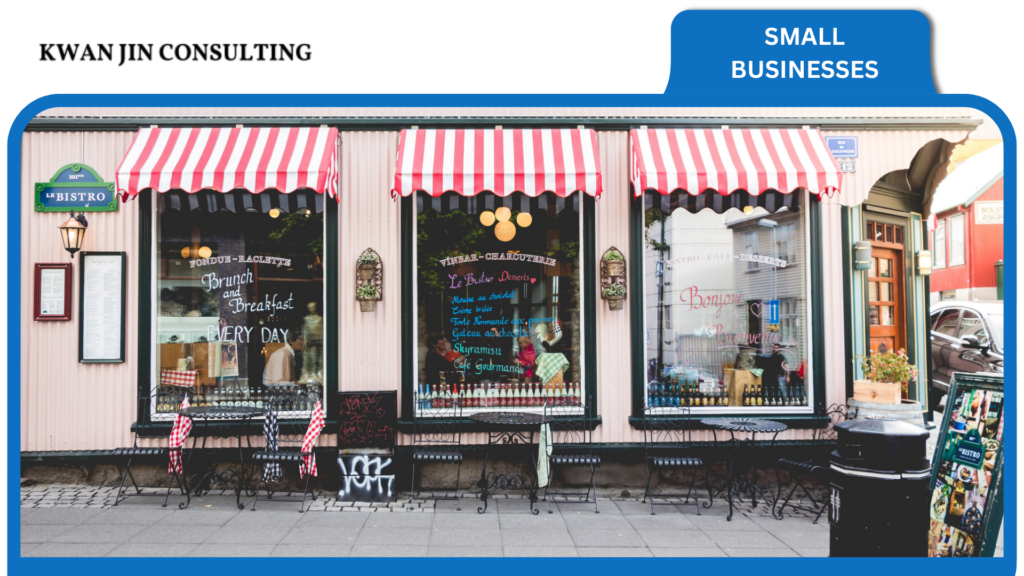
In 2026, there are approximately 36.21 million small businesses in the United States, and they account for 99.9% of all U.S. businesses. Whether you run a local bakery, a regional manufacturing shop, or a consulting practice, your company plays a critical role in the economy and your community. This guide covers what defines a small business today, how these firms drive job growth and economic development, how to start and scale one effectively, and why decisions around community giving, marketing, and outside advisors can make or break your trajectory.
Key Takeaways
A small business in the U.S. is typically defined as having fewer than 500 employees and meeting industry-specific annual revenue thresholds set by the Small Business Administration. In 2026, roughly 36.21 million small businesses make up 99.9% of all firms and employ about 62.3 million Americans.
Small businesses created 88.9% of overall job growth from 2023 to 2024 and account for 43.5% of U.S. GDP, making them indispensable engines of the economy at both the local and national levels.
Starting and growing a small business requires a written business plan, the right legal structure, smart financing, disciplined cash-flow management, and a marketing strategy matched to your business size and budget.
Donating and volunteering in your local community is not just goodwill-it is a strategic investment in brand awareness, employee loyalty, customer referrals, and long-term company value.
Knowing when to hire a marketing company, seek a mentor, or bring in a business consultant can accelerate growth, improve systems, and dramatically increase your company’s valuation when it comes time to sell.
What Is a Small Business in 2026?
A small business is a privately owned company classified primarily by its business size-specifically, how many employees it has and how much annual revenue it generates. Unlike large businesses and large corporations, small firms operate independently, are not nationally dominant in their particular field, and tend to have a direct connection between the owner and daily operations.
In the U.S., the Small Business Administration sets the official line. The SBA defines small businesses by revenue and employee count, with the general rule that a firm with fewer than 500 employees qualifies as small. However, industry-specific small business size standards can stretch as high as 1,500 employees or set revenue caps in the tens of millions, depending on the sector.
To make this concrete: a local bakery with 8 employees and $900,000 in annual revenue is a small business. So is a 220-employee precision machine shop generating $35 million in sales. Both fall under SBA thresholds for their respective industries. Most people picture something closer to the bakery, and they’re right-most small businesses actually have far fewer employees, often under 20, and many are single-owner operations where self employment is the entire payroll.
Small Business = Independent + Limited Employees + Limited Revenue. If your firm is not publicly traded, is not a subsidiary of a large organization, and meets the SBA’s size criteria for your industry, you are a small business.
How Many Small Businesses Exist and How Big Are They?
The numbers are staggering. In 2026, there were approximately 36.21 million small businesses operating across the country. That figure means small businesses account for 99.9% of all U.S. businesses-leaving only a sliver for large companies.
But “small” covers a wide range. The majority of these millions of small businesses have fewer than 10 employees. Many are nonemployer firms-freelancers, sole proprietors, and independent contractors with no payroll beyond the founder. The “fewer than 500 employees” threshold is an upper bound, not the norm. Most small firms exist far below it.
Here is how business size categories break down in practice:
Nonemployer firms (0 employees): A solo consultant working from home, generating $120,000 in annual receipts. No staff, no payroll taxes.
Microbusinesses (1–9 employees): A neighborhood coffee shop with 4 part-time baristas and $400,000 in revenue.
Small employers (10–99 employees): A regional plumbing company with 45 employees and $6 million in sales.
Mid-sized small firms (100–499 employees): A regional manufacturer with 250 staff members and $50 million in revenue-still classified as a small business under many SBA standards.
The Census Bureau and the SBA Office of Advocacy are the primary sources for these counts. Both update their estimates annually, and they remain the most reliable references for understanding the composition of the small business sector.

How Small Businesses Compare to Large Businesses
The gap between small and large businesses is not just a matter of headcount-it is structural. Large organizations typically operate with multiple management layers, dedicated legal and finance teams, access to public capital markets, and marketing budgets that can dwarf a small firm’s entire revenue. Small firms, by contrast, run leaner. The owner often handles decision making across operations, sales, and strategy, sometimes all in the same afternoon.
Consider the revenue scale difference: a neighborhood hardware store pulling in $3 million in annual revenue competes in the same industry as a national chain generating $30 billion. The chain benefits from economies of scale in purchasing, logistics, and advertising. The independent business cannot match those advantages dollar-for-dollar.
But small businesses hold real edges over large corporations in several areas. Speed is one. Without layers of bureaucracy, a small firm can shift pricing, launch a new service, or respond to a customer complaint in hours rather than weeks. Owner involvement in customer service creates loyalty that no corporate call center can replicate. And many small businesses thrive by serving niche local markets that big chains overlook entirely-specialty food products, culturally specific services, or hyper-local expertise.
Here is a quick comparison:
Speed of decision making: Small businesses pivot fast. Large companies move through committees.
Capital access: Large businesses tap public markets and institutional credit. Small firms rely on owner savings, SBA loans, and local banks.
Brand recognition: Large companies invest millions in national advertising. Small firms build brand through community presence, word-of-mouth, and local reputation.
Risk concentration: In a small business, a single lost client or the owner’s illness can threaten the whole operation. Large firms absorb shocks more easily.
Both small and large businesses fill essential roles in the economy. The key is understanding where your strengths lie and building on them.
The Role of the Census Bureau and NAICS in Defining Business Size
The U.S. Census Bureau tracks economic development data across the country, counting businesses, employees, and revenue to measure job growth, sector trends, and regional economic health. These counts form the backbone of policy decisions, funding allocations, and the statistical picture of the small business economy.
NAICS-the North American Industry Classification System-is the federal system that classifies every business by industry using a six-digit code. Grocery stores, accounting firms, and software publishers each have their own codes. NAICS organizes the economy so that analysts, lenders, and government agencies can compare businesses within the same industry on an apples-to-apples basis.
However, NAICS codes alone do not distinguish between small and large businesses. The SBA overlays its size standards on those codes. For example, a business classified under the NAICS code for full-service restaurants may be considered small if its annual receipts fall below a specific dollar threshold. A manufacturer in a different NAICS category might qualify as small based on employee count-say, up to 500 or even 1,250 workers, depending on the subsector.
If you own a small business and want to know whether you qualify for SBA loans, grants, or government contracts, you can use the SBA’s online Size Standards Tool. Enter your NAICS code, and the tool will tell you the revenue or employee ceiling for your industry. This matters especially for firms pursuing federal government contracts or SBA-backed financing.
Economic Impact: Why Small Businesses Matter
Small businesses are the engines that drive local and national economies. Their collective weight is enormous-not because any single firm is large, but because there are so many of them and they reach into every corner of the country.
The numbers tell the story clearly:
Small businesses account for 43.5% of U.S. GDP.
Small businesses employ about 62.3 million Americans-roughly 45.9% of all private-sector workers.
Small businesses generated nearly $18 trillion in revenue in 2022.
Small businesses are important because they provide the bulk of net new jobs, particularly during recovery periods after economic shocks.
Beyond direct employment and output, small firms feed the supply chains of large companies. A large automaker depends on dozens of small component suppliers, local logistics firms, and specialized service providers. A regional hospital contracts with small cleaning companies, IT consultants, and medical equipment distributors. This interdependence means the health of the small business sector directly affects the performance of the broader private sector.
Economic development at the city and county level often hinges on small business formation and retention. When a new business opens on a downtown block, it creates jobs, draws foot traffic, and raises property values. When many small businesses cluster in a district, they create a self-reinforcing cycle of growth and community investment.

Job Growth and Employment Patterns
Small firms are the primary source of net job creation in the United States over multi-year periods. Individual businesses open, grow, shrink, and close constantly-but in aggregate, small businesses have been responsible for the lion’s share of new jobs for nearly two decades. Small businesses created two-thirds of net new private-sector jobs since 2007, a statistic that holds up across economic cycles.
More recently, small businesses accounted for 88.9% of overall job growth from 2023 to 2024. That figure is striking because it shows that even in a period of economic uncertainty, small firms were doing the heavy lifting on job growth while many large corporations held hiring flat or reduced headcount.
The distribution of small business employment varies by industry. Small businesses employ the majority of workers in sectors like construction, agriculture, food services, personal care, and professional services. In capital-intensive industries such as utilities, aerospace, and large-scale manufacturing, large businesses dominate employment.
Technology has allowed many small businesses to operate with fewer employees than they would have needed a decade ago. Automation, cloud software, and outsourced services mean a 10-person firm today can produce the output that once required 20. This trend supports strong output and wages even as headcounts stay lean.
Industry Snapshot:
Construction: Small firms employ the vast majority of workers. Most contractors have fewer than 20 employees.
Professional services: Accounting, legal, and consulting firms are overwhelmingly small. Many are sole proprietorships.
Food services: Restaurants and catering businesses are mostly small employers, though they face high turnover.
Utilities and aerospace: Large businesses dominate. Small firms play supporting roles as subcontractors.
Small businesses have a higher job turnover rate than large firms, partly because they are more sensitive to economic cycles and partly because many employees use small firms as stepping stones early in their careers.
Common Legal Structures for Small Businesses
Choosing a legal structure is one of the foundational decisions any small business owner makes. It affects how you pay taxes, how much personal liability you carry, and how easy it is to bring in investors or partners down the road.
Here are the main options:
Sole proprietorship: The simplest form. No separate legal entity-you and the business are one. Easy to set up, but you are personally liable for all debts and legal claims. Common for freelancers, consultants, and very early-stage businesses.
Partnership: Two or more owners share profits, losses, and liability. General partnerships offer simplicity; limited partnerships add liability protection for some partners.
LLC (Limited Liability Company): Separates personal and business assets. Flexible tax treatment. Popular among small business owners because it combines liability protection with relatively simple administration.
S corporation: A tax election that allows profits to pass through to owners’ personal returns, avoiding double taxation. Works well for profitable small firms with a modest number of shareholders.
C corporation: A fully separate legal entity. Subject to corporate income tax, but offers the most flexibility for raising outside capital. Common among firms preparing for significant growth or eventual sale.
How does legal structure connect to business size? Microbusinesses often start as sole proprietorships or single-member LLCs because the setup cost is minimal and the paperwork is light. As a firm grows-adding partners, hiring employees, bringing in investors-it may convert to an S corporation or C corporation.
For example, a two-owner consulting firm might launch as an LLC in 2026. Three years later, as profits increase and the owners begin thinking about a potential sale, they convert to an S corporation for tax efficiency and to present a cleaner structure to prospective buyers.
Whatever you choose, seek legal and tax advice before finalizing your structure. The wrong choice can cost you thousands in unnecessary taxes or leave you exposed to personal liability you did not anticipate.
Building a Practical Business Plan
A business plan is the blueprint for launching and scaling your company. It is also the document that lenders, SBA programs, and investors expect to see before they write a check. Yet over half of small firms lack a business plan, and this gap directly impacts their success rates.
A strong plan for a small business covers these components:
Executive summary: A concise overview of what the business does, who it serves, and why it will succeed.
Market analysis: Who are your potential customers? What do competitors charge? What are current market demands in your industry?
Products and services: What are you selling products or services? What makes yours different?
Marketing strategy: How will you reach new customers? Which channels will you prioritize? (More on this below.)
Operations plan: Where is your business physically located? How do daily operations work?
Team and staffing: How many employees do you need now, and what are your hiring milestones? For example, “Add 2 service technicians by Q3 2027” or “Reach 10 employees and $1.2 million in annual revenue by end of year three.”
Financial projections: Revenue forecasts, expense budgets, and break-even analysis for at least three years.
Your business plan should be a living document. Update it at least once a year as conditions change, new competitors enter your market, and your own assumptions get tested by reality. A plan that sits in a drawer gathering dust is nearly as bad as no plan at all.
Financing, Cash Flow, and Annual Revenue Benchmarks
Under-capitalization and cash-flow mismanagement remain persistent causes of small business failure. A profitable business can still fail because it runs out of cash. Many small businesses fail because revenue arrives slower than expenses leave the bank. Cash flow is the lifeblood of any enterprise, and managing it is not optional-it is survival.
Financing sources
Small businesses can draw from several funding channels:
Owner savings and friends/family: The most common starting point. Low paperwork, high relationship risk.
Bank loans: Traditional but difficult. Securing traditional bank loans is difficult for early-stage businesses without established credit history or collateral.
SBA-backed loans: The SBA’s lending programs guaranteed about $45 billion in loans. The SBA guarantees loans ranging from $500 to $5.5 million, covering a wide range of needs from microloans to major expansion.
SBA Microloan program: Provides government-funded seed capital for startups and very small firms that can’t access conventional bank financing.
Equipment financing, revenue-based financing, and equity crowdfunding: Newer tools that have expanded access for many businesses.
Revenue and cash flow planning
Think about annual revenue targets concretely. Calculate your break-even point based on fixed costs (paying rent, insurance, software), variable costs (materials, commissions), your desired owner salary, and typical margins in your industry.
A practical example: a service firm aiming for $500,000 in annual revenue by year three needs to cover three full-time staff, the owner’s salary, and overhead while maintaining a 15% profit margin. That means roughly $75,000 in annual profit after all expenses-enough to reinvest and build a cushion.
Small businesses should track cash flow closely to keep liquid capital available. Maintaining a rolling 13-week cash-flow forecast is one of the most effective tools for staying ahead of shortfalls. Separate personal and business finances with dedicated accounts and bookkeeping software from day one. Pull your financial statements monthly, not just at tax time.
Advantages and Disadvantages of Being a Small Business
Being small brings real strengths and real constraints. Here is a clear-eyed look at both sides.
Small businesses often face a combination of financial, operational, workforce, and competitive pressures that large organizations can absorb more easily. Yet 69% of small businesses last at least two years, and many thrive for decades.
Advantages:
Fewer layers of approval mean faster pivots and quicker responses to customer needs
Close, personal customer relationships that build loyalty
Ability to serve hyper-local or niche markets that large companies ignore
Lower overhead with fewer employees and leaner operations
Direct owner involvement in quality control and culture
Disadvantages:
Limited access to capital-small businesses face challenges in accessing capital for growth compared to large firms with deep credit lines
Smaller marketing budgets and less brand recognition outside the local area
Vulnerability to losing a single large customer or key employee
Risk concentrated on the owner’s time, health, and decision making
In 2026, 46% of businesses identified inflation as a top challenge, squeezing margins further
A 6-employee catering company can adapt its menu and delivery model in days when customer preferences shift. A small retailer, however, may be squeezed out when a national chain opens nearby and undercuts on price. The same flexibility that helps small firms innovate also means they absorb shocks with thinner margins.
Marketing Foundations for Small Businesses
Many businesses struggle not because of product quality but because too few people know they exist. Customer acquisition remains a major challenge for small businesses, and small businesses often struggle to attract customers beyond their local area without a deliberate plan.
Here is a simple marketing framework for firms with limited budgets:
Define your target audience. Who are your potential customers? Be specific about demographics, location, and the problem you solve.
Clarify your value proposition. What makes you different from competitors? State it in one sentence.
Build a consistent brand. Name, logo, colors, and messaging should look the same everywhere customers find you.
Build a fast, mobile-friendly website. This is non-negotiable. Building a fast, mobile-friendly website is essential for small businesses in 2026.
Leverage local SEO. Leveraging local SEO can significantly enhance customer acquisition for small businesses, especially those serving a defined geographic area.
Pick one or two primary channels. A one-person consulting firm might focus on LinkedIn and referrals. A 30-employee retailer may invest in local advertising and Google Ads. Small businesses can use Google Ads for affordable online marketing without committing to massive budgets.
Social media marketing has a higher lead-to-close rate than traditional media, making it a cost-effective channel for many small businesses. Eighty percent of customers value their experience as much as products, so every touchpoint-from your website to your voicemail greeting-matters.
Small businesses must build direct communication channels like email or text marketing to stay connected with customers without relying entirely on algorithms. Entrepreneurs should protect their online reputation to remain competitive, since a single string of bad reviews can undo months of marketing effort.
Track basic metrics in plain language: website visits, cost per lead, conversion rate, and customer lifetime value. Customer acquisition cost and customer lifetime value should be measured by small businesses so you know which channels actually drive revenue and which are burning budget.

How to Choose a Marketing Company to Grow Your Business
At some point, most small business owners hit a ceiling: you are spending so much time running daily operations that marketing gets done inconsistently, if at all. That is usually the signal to consider hiring an outside marketing company.
The timing question is straightforward. When your annual revenue has reached a stable baseline-typically $250,000 to $500,000 or more-and the owner’s time is the bottleneck restricting growth, an agency can take marketing off your plate and do it better than you can alone. Before that point, DIY or lean internal efforts usually offer a better return.
Selection criteria
When evaluating a marketing company or public relations agency, focus on these factors:
Industry fit: Look for agencies with clients in your industry or at a similar growth stage. A firm that works with large organizations may not understand the constraints of a 15-person service company.
Proven results: Ask for case studies showing concrete outcomes-percentage increase in leads, revenue growth, new clients acquired. Avoid agencies that only talk about likes and followers.
Transparent fees and deliverables: Understand the pricing model (flat fee, retainer, or performance-based). No hidden costs.
Strategy, not just activity: A good agency proposes a marketing strategy tailored to your goals. A poor one lists services without connecting them to your KPIs.
Data ownership: You must retain access to all ad accounts, analytics, and marketing data. If the agency controls your accounts, you are locked in.
Due diligence steps
Ask for references from 2–3 clients of similar business size
Request a sample 90-day plan showing exactly what they will do and measure
Confirm that you own all accounts and creative assets
Structure a trial engagement of 3–6 months with clear goals (lead volume, revenue lift, ROI) before signing a long-term contract
Red flags
Guaranteeing specific rankings or results without understanding your business
Refusing to share references or case studies
Long contracts with no exit clause
Focusing on vanity metrics disconnected from revenue or new customers
Print this checklist and bring it to every agency conversation. The cost of choosing the wrong partner is not just the agency fee-it is the months of lost momentum, especially when a misaligned firm distracts you from strategic leadership, growth, and philanthropic impact insights.
Why Local Community Support and Donations Matter
Donating to and volunteering in your local community is not charity for charity’s sake. For a small business, it is one of the most effective and low cost ways to build your brand, attract new customers, strengthen employee loyalty, and open doors to relationships that drive long-term value.
The strategic case for giving
Research shows that small business owners who engage in strategic, long-term business philanthropy see measurable benefits. Firms that give back enjoy increased brand recognition, stronger customer trust, and more word-of-mouth referrals. In tight local markets, community involvement is often what differentiates an independent business from an impersonal chain.
The evidence goes beyond sentiment. A case study of the Miami Open for Business program distributed $15.7 million across 476 small businesses and nonprofits. That investment generated more than $23.6 million in new revenue among the recipients-demonstrating that strategic philanthropy consulting for businesses combined with technical assistance can multiply returns.
Concrete benefits
Referrals and repeat business: When you sponsor a local youth sports team or support a neighborhood food bank, customers notice. They recommend your business and come back more often. These referrals often have higher lifetime value because trust is already established.
Employee loyalty and recruiting: Many small business owners report that community involvement helps attract and retain talent. People want to work for firms that reflect their values, especially in a tight labor market, and leaders who build high-performance small-business teams are intentional about connecting culture, purpose, and giving.
Local ecosystem relationships: Contributing locally builds goodwill with city governments, chambers of commerce, trade associations, and nonprofits. These connections can open doors to grant funding, favorable licensing, or introductions to new clients.
Practical, low-cost ideas for 2026
Even businesses with fewer employees and modest revenue can make an impact, and many Arizona-based firms, for example, turn to business philanthropy consultants to design community initiatives:
Sponsor a local youth sports team or school event
Host or co-host a fundraiser for a neighborhood food bank
Donate services or expertise to a local nonprofit
Offer internships through a nearby community college
Volunteer as a group at a community clean-up or build day, following frameworks like corporate giving guides tailored to regions such as Phoenix, Arizona
Action Ideas for Your Marketing Plan:
Share photos and stories from community events on social media
Write a short blog post after each sponsorship or donation
Reach out to local press with a short announcement
Display community partnership logos on your website and in your shop
Invite customers to participate in your giving efforts (donation drives, matching campaigns)
The key is consistency. One-time blitzes do not build reputation. Showing up quarter after quarter, year after year, is what turns community giving into a genuine competitive advantage.
Do You Need a Mentor or Business Consultant?
Many owners run their businesses alone for years before realizing they are stuck-on revenue, systems, or a transition they do not know how to execute. The question is not whether outside help is valuable. It is knowing whether executive coaching or consulting is the right fit and when.
Three distinct roles
Mentor: Often informal and sometimes at no cost. A mentor offers advice based on experience, helps with pattern recognition, and provides encouragement during uncertain times. Many mentors come from SCORE, local trade associations, or professional networks, but you can also follow structured guidance on how to look for a mentor.
Business consultant: A paid professional who diagnoses specific problems-pricing, customer acquisition, operational bottlenecks-and recommends concrete changes. Some consultants also help implement new systems.
Exit-planning advisor: A specialist who helps position a company for sale. This includes formalizing processes, reducing owner dependence, cleaning up financial statements, and maximizing valuation.
When each role fits
Early phase: A mentor is most valuable during ideation, business model development, and when the founder is making early choices about legal structure, target market, and pricing. Programs like Small Business Development Centers offer free business counseling and training for entrepreneurs at this stage.
Scaling phase: Once product-market fit is found but growth has stalled-say, between $500,000 and $5 million in annual revenue-a paid consultant can break through specific bottlenecks. Research from the Creative Destruction Lab shows that early mentoring and advisory relationships significantly increase the likelihood of startups achieving above-median funding, higher valuation, and improved survival rates four years out.
Pre-exit phase: If you plan to sell within 1–3 years, an exit-planning advisor is essential. Many business owners delay this step and leave significant money on the table. Owners who get proper advice can move from a baseline valuation multiple of 2–3× EBITDA-typical for founder-dependent or high client-concentration businesses-to 6–8× or higher when recurring revenue, strong systems, and a diversified customer base are in place.
Where to find support
Local Small Business Development Centers (SBDCs)
SCORE mentors (available at no cost through any local SBA office)
Industry-specific trade associations
Trusted local accountants, attorneys, and business advisors
Accelerator and incubator programs for black entrepreneurs and underserved founders
The cost of a consultant or advisor ranges from modest (free SCORE mentors) to significant (exit-planning professionals may charge tens of thousands). But the ROI is clear: better growth, higher valuations, and lower risk of failure. Skipping outside help to save money often costs far more in the long run.
Hiring: How Many Employees Do You Really Need?
The right number of employees depends on your business model, revenue per employee targets, and what kind of life you want to live as an owner. There is no universal answer, but there is a practical framework.
Start by estimating the work capacity you need. How many hours of productive labor does your business require each week? Divide that by a reasonable full-time workload (typically 35–40 billable hours), and you get a rough headcount. Adjust for peak seasons, vacations, and the reality that not every hour is productive.
For example, a cleaning service with contracts totaling 200 hours of cleaning per week needs roughly 5–6 full-time cleaners. A café open 7 days a week with 14-hour days needs enough staff to cover shifts without burnout, usually 8–12 employees depending on volume.
In July 2026, 36% of surveyed U.S. small-business owners reported unfilled job openings-a reminder that finding and keeping good employees is one of the biggest operational challenges in the current market.
Questions to ask before your next hire:
Can this work be done by a contractor or freelancer instead of a full-time employee?
Can technology or automation handle part of the load?
What will payroll cost as a percentage of revenue? (For many service businesses, 30–40% is a common target.)
Will this hire generate enough additional revenue to cover their fully loaded cost within 90 days?
Think carefully before you hire employees, and think even more carefully before you skip a hire you genuinely need. Both mistakes are expensive.
Technology, Automation, and Competing With Larger Businesses
Modern software allows many small businesses to punch above their weight and operate with fewer employees while serving more customers. Automating workflows with modern tech tools is crucial for small businesses that want to stay competitive without scaling headcount prematurely.
Key tool categories to evaluate:
CRM (Customer Relationship Management): AI-driven customer relationship management tools help automate repetitive tasks like follow-up emails, appointment reminders, and lead scoring.
Accounting software: Cloud-based platforms handle invoicing, expense tracking, and tax prep without a dedicated bookkeeper.
Scheduling and dispatch: Online booking and mobile dispatch apps help service businesses manage appointments and routes efficiently.
E-commerce platforms: Even businesses that are primarily physically located in a brick-and-mortar space can add online sales with minimal setup.
Automation: Email sequences, chatbots, and workflow triggers save hours each week on tasks that do not require human judgment.
AI is increasingly becoming a practical business tool rather than an experiment. Small firms using AI for customer service, content creation, and data analysis are already seeing measurable productivity gains. Optimal operations can improve the productivity of small businesses without requiring a single new hire.
Consider a concrete scenario: a 4-person home services company in 2026 uses a mobile app for dispatch, online booking for customers, automated review requests after every job, and a simple CRM to track repeat clients. To customers, they look and feel like a much larger, more professional operation. That perception matters.
Start with 1–2 core systems and expand from there. Overwhelming your team with six new tools at once is a recipe for frustration and low adoption.
Government and Nonprofit Support for Small Business Development
Federal, state, and local governments invest heavily in small business development because it is one of the most reliable levers for economic development and job creation in the country. Nonprofits fill in gaps with targeted programs for underserved entrepreneurs and communities.
Key federal programs to know:
SBA-guaranteed loans: The SBA’s lending programs have guaranteed about $45 billion in loans, making it possible for small firms to access capital that traditional banks would not approve on their own.
Small Business Development Centers: These centers offer free business counseling and training across the country, covering everything from writing a business plan to navigating federal regulations.
SCORE mentors: Experienced business professionals volunteer to mentor small business owners and aspiring entrepreneurs at no cost.
Government contracts: The U.S. government mandates that small businesses receive 23% of prime contracts, creating a significant market for small firms that qualify.
Export support (STEP and similar programs): Resources for small businesses looking to sell internationally.
At the state and local level, many cities and counties maintain dedicated economic development offices offering grants, façade improvement programs, technical assistance, and support for regulatory compliance. Chambers of commerce, business alliances, and workforce development agencies provide networking, training, and referrals.
Where to start:
Visit your nearest SBA office or SBDC for small business resources
Check your local Chamber of Commerce for events and programs
Search for industry-specific trade associations
Look for state and municipal grant programs tied to job creation
Many of these services are free or available at very low cost. Ignoring them means leaving money, expertise, and connections on the table.

Preparing to Sell a Small Business
Many small business owners eventually want to sell, retire, or transition the company to new ownership. Whether that is in two years or twenty, the businesses that command the highest prices are the ones that prepare early.
What drives valuation
Buyers pay premiums for businesses with:
Consistent, growing profit over several years
Recurring or contract-based revenue
Strong, documented systems and processes
Low owner dependence-the business runs without the founder’s daily involvement
A diversified customer base (no single client represents more than 15–20% of revenue)
Clean financial statements and clear legal structure
How advisors help
A mentor, business consultant, or exit-planning advisor can help formalize processes, clean up financial statements, and adjust the legal structure to make the business more attractive to buyers. This is not something to start six months before listing. The most successful exits involve 3–5 years of preparation.
Example timeline:
Year 1–2: Document all standard operating procedures. Hire or train a manager to handle daily operations. Stabilize annual revenue and margins.
Year 3: Diversify the customer base. Reduce any single-customer concentration. Begin working with an accountant and attorney to prepare financials for buyer review.
Year 4–5: Engage a transaction advisor or M&A specialist for small firms. Set a target price based on current multiples in your industry. List the business or begin conversations with strategic buyers.
Before listing, assemble a small advisory team: an accountant who understands business sales, an attorney experienced with asset or equity transactions, and a transaction advisor who knows your industry. This team costs money upfront but routinely pays for itself many times over in the final sale price.
Looking Ahead: The Future of Small Businesses
The next decade will be shaped by remote work, digital commerce, demographic shifts, and continued high volumes of new business applications. These trends favor nimble small firms that can adapt their business plans, workforce, and legal structure faster than large corporations weighed down by bureaucracy.
Many small businesses of the 2030s will blend online and offline models. A local retailer will also sell through e-commerce. A consultant who once served only clients in one city will work with customers across the country via video. A service business that was limited by geography will use technology to scale into adjacent markets without adding a second location.
The entrepreneurs who succeed will see their business not just as a single shop or practice, but as a platform for new services, partnerships, and growth. They will invest in their communities, build systems that do not depend entirely on the owner, and know when to bring in the right outside help.
Small businesses are important to the economy, to their communities, and to the millions of Americans who depend on them for employment and opportunity. The firms that plan deliberately, give back generously, and grow with discipline will be the ones that define the small business economy for the next generation.

Frequently Asked Questions (FAQ)
How many employees can a company have and still be considered a small business?
In the U.S., most people use “fewer than 500 employees” as the standard threshold, and that is the general rule applied by the Small Business Administration. However, official SBA size standards vary by industry. In some sectors-certain types of manufacturing, for example-a firm can have up to about 1,500 employees and still qualify as small. In practice, the vast majority of small businesses have far fewer employees, often under 20. To check whether your company qualifies, look up your specific NAICS code on the SBA’s Size Standards Tool. Other countries use different thresholds and may weigh annual revenue more heavily than headcount.
Is a detailed business plan really necessary for a very small business?
Yes-even solo founders benefit from a simple, written business plan covering target customers, pricing, costs, and expected income. It forces you to think through assumptions that are easy to ignore when you are busy with daily operations. Lenders, investors, and many grant programs typically require a formal plan before providing funding. Keep the first version short-5 to 10 pages is enough-and update it at least once a year as your business and market evolve.
How much should a small business spend on marketing each year?
A practical range for many established small businesses is 5–10% of annual revenue. Younger companies in growth mode may invest 15% or more, especially if they are in a competitive market with high customer acquisition costs. Early-stage firms can start with low cost channels-referrals, partnerships, a basic digital presence-before scaling into paid advertising and agencies. The most important thing is tracking return on investment from each channel so you can shift budget toward what actually drives leads and revenue rather than spreading money thin across every platform.
When should a small business consider hiring a consultant or mentor?
Seek a mentor as early as possible-ideally before you formally launch. A good mentor helps you avoid common mistakes and provides perspective you cannot get from books or courses alone. Paid consultants make the most sense when your business has clear product-market fit but is stuck at a revenue ceiling, dealing with repeated cash-flow crunches, or facing operational problems the owner lacks time or expertise to solve. Consultants and exit-planning advisors are especially valuable 1–3 years before a planned sale, when improving systems, profitability, and valuation can add hundreds of thousands of dollars to the final transaction price.
Does donating to the local community really help my bottom line?
When done strategically and authentically, yes. Local donations and volunteering increase brand awareness, strengthen customer loyalty, improve employee engagement, and build relationships with community leaders and organizations. For example, a small restaurant that regularly supports local school events often sees repeat visits and referrals from parents and teachers-customers who might never have discovered the business otherwise. Track your community efforts (events sponsored, hours volunteered, dollars donated) and tie them into your marketing content so customers see and share the impact. Consistency matters more than the dollar amount.