
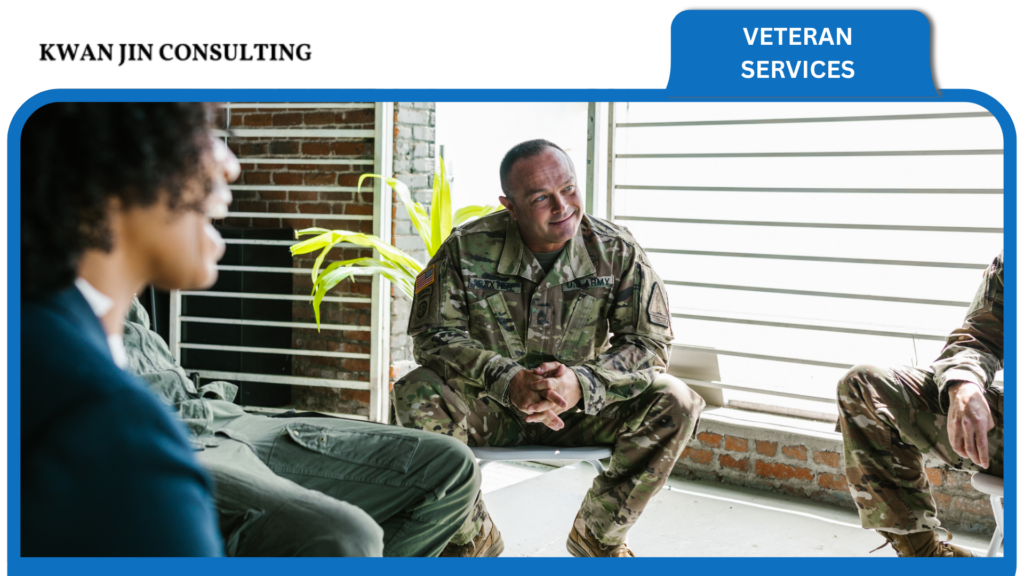
The transition from military to civilian life is one of the most significant shifts a person can make. For many veterans, starting a business offers a way to channel the discipline, leadership, and mission-driven mindset they developed in uniform into something that supports their families, their communities, and the broader economy. This guide is a practical, step-by-step roadmap for veterans interested in turning military skills into a profitable venture, covering everything from validating a business idea to registering your company and pursuing government contracts.
Key Takeaways
Over 2.52 million veterans have transitioned to business ownership in the United States, and veteran owned businesses generated an estimated $884.5 billion in 2022. Veterans are uniquely positioned to succeed as entrepreneurs, and this article gives you a clear path from service to ownership.
Military skills translate directly to business success. Discipline, leadership under pressure, mission focus, teamwork, and logistics experience all support writing a strong business plan and running day-to-day operations effectively.
Exclusive support programs exist for veteran entrepreneurs. The small business administration offers Boots to Business training, Veterans Business Outreach Centers provide counseling and mentorship nationwide, and federal contracting set-asides give veteran owned small businesses a competitive advantage in the marketplace.
Real-world inspiration matters. Kwan Jin Phoenix’s journey from U.S. Marine to multi-million-dollar business owner and community mentor shows what’s possible when military experience meets strategic planning and a heart for giving back.
Veterans have access to various programs specifically designed to support entrepreneurship, from specialized funding programs and grants to training and certifications that open doors to government contracts.
This article gives you an action plan. You’ll leave with a clear checklist covering your first 90 days, from validating your business idea to registering a new business and pursuing federal contracting opportunities.

Why Veterans Make Strong Small Business Owners
The numbers speak for themselves. Veterans are 45% more likely to be self-employed than non-veterans. As of recent data, veteran owned businesses employ millions of Americans and contribute nearly a trillion dollars annually to the economy. A veteran-owned business is approximately 8.2% less likely to fail than a comparable non-veteran-owned firm, with a 55-57% chance of surviving at least five years.
What drives these results? Veterans possess skills like leadership and crisis management from military service that map directly to entrepreneurship:
Leadership under pressure: A platoon leader making decisions with incomplete information mirrors a small business owners navigating market uncertainty.
Operational planning and logistics: A supply sergeant managing inventory across multiple locations has already practiced the fundamentals of supply chain management.
Risk assessment: Evaluating threats in the field translates into evaluating financial risk, regulatory compliance, and market competition.
Decision-making under stress: Combat and deployment conditions build the ability to act decisively when stakes are high.
Teamwork and accountability: Building and leading a team of employees requires the same trust-building and delegation skills used to lead a squad.
Veterans’ familiarity with standard operating procedures translates into creating repeatable business processes, customer service playbooks, and quality control systems. The military’s culture of after-action reviews becomes quarterly business reviews and KPI tracking in the civilian world.
Public trust in veterans remains high. Using a “veteran owned” badge on your website or storefront can add genuine credibility, but the key is to pair that badge with real value. Customers will return because you solve their problem, not because of a logo alone.
Kwan Jin Phoenix: A Model of Military-to-Civilian Business Success
Kwan Jin Phoenix is one of the most compelling examples of a veteran who successfully navigated the military to civilian transition, built a thriving business, and dedicated himself to giving back to the community. A Korean-born U.S. Marine Corps veteran, Kwan served six years in the Marines, including deployment during the Desert Shield and Desert Storm era. His military service gave him a foundation in leadership, logistics, structured problem-solving, and mentoring younger service members.
After separating from the Marines, Kwan pursued higher education, earning an MBA and becoming a doctoral candidate focused on leadership, veteran reintegration, and business philanthropy. Rather than rushing into entrepreneurship unprepared, he invested in credentials and skills before launching his flagship venture: Ace Home Services, a home services company in Arizona specializing in HVAC, plumbing, and home comfort. Under his leadership, the company grew to employ an estimated 51-200 people and reached revenue in the $25-50 million range before a successful private equity acquisition.

What makes Kwan Jin Phoenix truly remarkable is his commitment to community. Today, he focuses heavily on mentoring other veteran entrepreneurs and immigrant-owned businesses. He consults with veterans starting a business, conducts academic research on veteran reintegration, engages in philanthropy across Phoenix and surrounding areas, and participates on nonprofit boards supporting military families.
Actionable lessons from his story include:
Prepare before you leap. Kwan earned his MBA and studied his market before launching.
Invest in operations early. He built training systems and standardized processes from the start.
Build community trust. His brand grew through relationships, not just advertising.
Plan your exit. The private equity acquisition showed strategic maturity, not just day-to-day hustle.
Give back. Service continues even after the uniform comes off.
“Turning challenges into growth” and “service continues even after the uniform” are themes Kwan embodies. His story reminds us that entrepreneurship is not just about profit; it’s about purpose and impact.
Clarifying Your Mission: Why You Want to Start a Business
In the military, every operation starts with a mission briefing. Entrepreneurship is no different. Before you pick a business idea or write a single line of your business plan, you need to define why you want to be a small business owner and what success looks like in the next three to five years.
Ask yourself these questions:
What annual income do I need to support my family, and what would I want to earn within five years?
Do I want lifestyle flexibility, or am I willing to work long hours to scale fast?
Is my goal to create employment for other veterans or military families?
Do I want to build a business to sell, or do I want long-term business ownership?
Am I solving a problem I genuinely care about?
Honest self-assessment prevents common mistakes. If you hate paperwork, a highly regulated field like manufacturing or government contracting may frustrate you. If heavy sales isn’t your strength, a business model built on inbound marketing or recurring contracts may be a better fit.
Encourage your spouses and key family members to participate in this early planning stage. Launching a new business affects housing, childcare, savings, and daily routines. Getting everyone aligned on the mission now prevents conflict later.
Translating Your Military Experience into a Business Idea
Every MOS, AFSC, and rating contains marketable skills, but translating military skills into commercial language can be a challenge for veteran entrepreneurs. Civilian employers and customers don’t know what a “92A” or “0311” does. Your job is to convert those experiences into language the market understands.
Here are concrete examples of how military roles map to civilian ventures:
Military Role | Potential Business Idea |
|---|---|
Logistics NCO | Freight brokerage, inventory consulting |
Intel Analyst | Cybersecurity firm, risk assessment consulting |
Military Recruiter | Staffing agency |
Combat Medic | Health coaching, first-aid training |
Maintenance Crew Chief | Mobile repair services |
Communications Specialist | IT services, networking installation |
Think about the problems you solved in service. Supply delays, communication breakdowns, and training gaps all have civilian equivalents that customers will pay to fix.
Before diving into details, write a one-sentence description of your potential business: “I help X do Y by Z.” This elevator pitch forces clarity and helps you explain your concept to lenders, mentors, and customers.
Veteran-specific programs like SBA Boots to Business and Veterans Business Outreach Centers can help you translate experience into concrete business concepts through workshops and mentoring.
Validating Your Business Idea with Real-World Data
Military planning demands reconnaissance before action. In business, that means conducting market research and testing demand before you invest savings or VA benefits into a venture.
Here are practical validation steps:
Interview potential customers. Talk to 10-15 people who would actually pay for your product or service.
Analyze local competitors. Who else serves your target market? What do they charge? Where are their gaps?
Check search trends. Use free online tools to see if people are actively searching for what you plan to offer.
Run a small paid test. Spend a modest amount on a social media ad or a landing page to gauge interest.
Pre-sell your service. Offer an introductory rate to a handful of early customers before fully launching.
You don’t need expensive market research firms. Online surveys, social media polls, in-person conversations at veteran meetups, and networking events at your local chamber of commerce can quickly confirm whether your small business idea solves a real problem.
Veterans should tap into military spouse communities and local veteran networks for fast, honest feedback. And remember: “no” or lukewarm feedback is valuable intel. It should shape or pivot your idea, not be taken as a personal failure.
Writing a Battle-Ready Business Plan
A business plan is a roadmap to success, and for veterans, thinking of it as an operations order (OPORD) makes the process intuitive. Just as an OPORD covers situation, mission, execution, logistics, and command and control, your business plan covers the equivalent in commercial terms.
A solid business plan includes market analysis and financial projections. Here are the core sections every veteran entrepreneur should include:
Company overview: What your business does, who it serves, and your mission statement.
Market analysis: The size of your target market, customer demographics, and competitive landscape.
Products or services: What you sell and how it solves a customer’s problem.
Marketing plan: How you’ll reach customers, including digital and local strategies.
Operations plan: Daily workflows, supply chain, staffing, and quality control.
Management team: Your background, key hires, and advisory support.
Financial projections: Revenue forecasts, expense budgets, and cash-flow models for the next three to five years.
Lenders, investors, and even some grant programs require a formal business plan before approving funding for a new business. The SBA, Veterans Business Outreach Centers, and several nonprofit training programs offer free business plan workshops specifically tailored to veteran entrepreneurs.
Don’t get stuck aiming for perfection. A completed plan you can iterate on is far more valuable than a flawless document you never finish.

Choosing the Right Legal Structure and Registering Your Business
Your legal structure affects taxes, personal liability, and eligibility for certifications like service disabled veteran owned small business status. Making the right choice early saves headaches later.
Here are the main U.S. options:
Structure | Pros | Cons |
|---|---|---|
Sole Proprietorship | Simplest, lowest cost to start | Unlimited personal liability |
LLC | Liability protection, flexible taxation | Annual state fees, more paperwork |
S-Corporation | Tax advantages on self-employment income | Strict requirements, ownership limits |
C-Corporation | Unlimited shareholders, attractive to investors | Double taxation, complex compliance |
The basic registration process involves choosing a business name, checking for trademarks, filing with your state’s Secretary of State office, obtaining an Employer Identification Number (EIN) from the IRS, and securing any required state or local licenses.
Many states offer veteran-specific registration fee waivers or fast-track processes. Check with your state’s small business or veterans affairs office for current offerings.
If you plan to pursue federal contracting or bring in partners and investors, consult with a qualified attorney or tax professional before filing. The wrong structure can disqualify you from certifications that require at least 51% veteran ownership and control of daily operations.
Setting Up Your Business Finances from Day One
Separate personal and business finances immediately. Open a dedicated business checking account and, if possible, a business savings or reserve account. Mixing finances creates tax complications and makes it nearly impossible to track profitability.
Key financial setup steps:
Select accounting software. Cloud-based tools designed for small business owners make bookkeeping straightforward.
Establish basic bookkeeping routines. Record income and expenses weekly, not just at tax time.
Plan for quarterly taxes. Self-employment taxes can surprise you if you don’t set aside funds throughout the year.
Create a 12-month cash-flow forecast. Know when money is coming in and going out so you can plan ahead.
Build business credit. Apply for an EIN, set up vendor accounts, and request a modest business credit card or line of credit once basic revenue is established.
Many small business administration-backed lenders and community banks have veteran-focused products or relationship managers who understand VA income, GI Bill benefits, and common transition timelines. They can help you navigate the process of establishing credit in a business context.
Before relying entirely on your new business income, conduct a personal financial readiness check. Evaluate your emergency savings, debt load, and insurance coverage. Veterans’ credit scores may decline due to unemployment or medical costs during transition, so address any issues before applying for business financing.
Financing Options and Grants for Veteran Entrepreneurs
Access to capital is often the biggest hurdle for new veteran entrepreneurs. But veterans have access to exclusive funding options for businesses that most civilians don’t.
Common financing pathways include:
SBA-backed small business loans: These often come with favorable terms. Some SBA loan programs reduce or waive fees for veteran borrowers.
Community Development Financial Institutions (CDFIs): These organizations serve underbanked communities and often have veteran-friendly lending criteria.
Microloans: Smaller loans (typically under $50,000) ideal for start ups that need modest capital to get off the ground.
State and municipal loan programs: Many states offer dedicated funding programs for veteran owned small businesses.
Veterans may struggle to obtain loans for their businesses, especially if they have limited collateral or a thin credit history. Veterans may face declining credit scores after leaving the military, which makes preparation essential.
The reality of grants is straightforward: free money is rare and competitive. Some nonprofit and government programs periodically offer grants or pitch competitions limited to veteran entrepreneurs or service disabled veteran owners, but these should be treated as supplements, not primary funding sources.
When preparing to talk to lenders, bring a clear business plan, realistic financial projections, personal credit history, and collateral documentation if applicable. Veterans can access specialized funding and contracting programs through SBA resources, and Veterans Business Outreach Centers can help you review financing options and avoid predatory lenders that target transitioning service members.
The VA’s VR&E Program also supports veterans with a service connected disability in self-employment ventures, providing resources and guidance to help launch or stabilize a business.
Training Programs and Expert Support for Veteran Entrepreneurs
Veterans can leverage training and mentorship designed for entrepreneurship, and they do not need to learn business alone. There is a national ecosystem of free or low-cost training programs specifically built for veteran entrepreneurs and military families.
Boots to Business is an SBA training program for transitioning service members, delivered as part of the Department of Defense’s Transition Assistance Program. This two-day foundational course introduces business basics at no cost. Boots to Business trained over 50,000 service members since 2013. Follow-on programs include Boots to Business Reboot (for veterans of all eras, national guard, and Reserve members) and Boots to Business: Revenue Readiness, a six-week online course that helps turn ideas into business models. The program is connected to resources at Syracuse University’s D’Aniello Institute for Veterans and Military Families.
Additional training programs include:
Entrepreneurship Bootcamp for Veterans with Disabilities (EBV): This program trains post-9/11 veterans with service-connected disabilities in business training and planning.
Patriot Boot Camp: Provides entrepreneurial education for veterans and spouses through immersive, hands-on experiences.
Bunker Labs: Offers cohort-based programs for veteran and military spouse entrepreneurs.
Veterans Business Outreach Centers provide training, counseling, and mentorship for veterans. VBOCs deliver workshops, one-on-one counseling, and help with business plan development, often both in-person and online. They offer training and mentoring nationwide.
Leveraging these training programs early can significantly shorten the learning curve and improve the odds of success for a new business. Whether you need help with marketing, financial projections, or hiring, there is a program or advisor ready to support you.
Certifications and Government Contracting Opportunities
The federal government allocates contracts specifically for veteran-owned businesses, and federal contracting opportunities represent one of the most significant advantages available to veteran small business owners. Federal agencies actively seek to award a portion of contracts to qualified firms, creating a reliable revenue stream for those who qualify.
The main certifications include:
Veteran Owned Small Business (VOSB): Requires at least 51% ownership and control by one or more veterans.
Service-Disabled Veteran-Owned Small Business (SDVOSB): Same ownership requirement, with the added criterion that the veteran owner has a service connected disability. Service-Disabled Veteran-Owned Small Businesses receive priority in contracting through set-aside and sole-source opportunities.
The SBA’s VetCert program and MySBA Certification platform streamline the certification process. MySBA Certification allows access to federal contracting opportunities, connecting certified veteran businesses to set-aside and sole-source contracts across federal agencies.
The VA’s Veterans First Contracting Program prioritizes service-disabled veteran-owned businesses for department procurements, creating additional pathways for revenue.
To pursue federal contracting, you’ll need to:
Obtain a Unique Entity Identifier (UEI).
Register in SAM.gov.
Search for opportunities on official procurement portals.
Prepare proposals that meet compliance requirements.
Veterans Business Outreach Centers provide resources for government contracting, and organizations like APEX Accelerators and the Veteran Institute for Procurement can guide you through proposals, compliance, and contract management. Government contracts can provide stable, long-term revenue for veteran owned businesses across sectors from manufacturing to professional services.

Marketing Your Veteran-Owned Business
Strong operations are not enough. You must actively market your small business so potential customers know you exist and understand the value you deliver.
Start with these foundational marketing actions:
Create a simple, professional website. It doesn’t need to be complex, but it needs to load fast, explain your services, and make it easy to contact you.
Claim your Google Business Profile. This is critical for local visibility.
Set up focused social media accounts. Choose one or two platforms where your target customers actually spend time.
Collect testimonials. Early reviews from veteran or military family customers build social proof quickly.
List your business in veteran business directories. Several national and local directories specifically feature veteran owned businesses.
Highlight your veteran status in branding ethically. A “veteran-owned” story section on your website, paired with results and customer benefits, builds trust without becoming gimmicky. Your marketing should focus on what you do for your customers, with your service history as context, not the entire pitch.
Don’t neglect offline tactics. Local networking, chambers of commerce, community events, and networking events where a veteran story resonates can generate referrals faster than digital ads in many markets.
Building a Support Network: Family, Mentors, and Veteran Communities
In the military, no mission succeeds without a support structure. The same is true for sustainable entrepreneurship, especially during the high-stress first 12-24 months.
Military spouses and family members play a critical role in the success of a new business. Have honest conversations early about time commitments, financial expectations, and shared responsibilities at home. Many military spouses are also interested in entrepreneurship themselves, and some programs specifically support spouses through training and mentoring.
Mentorship resources include:
SCORE mentors: Free, experienced business advisors available nationwide.
VBOC advisors: Veteran-focused counseling and guidance.
Experienced veteran entrepreneurs: Peers who have already navigated pricing, hiring, and setbacks.
Many veterans struggle with building a civilian business network after military service. Veteran-focused networking organizations, local meetups, and online communities can fill that gap. These are places where small business owners share referrals, team up on government contracting bids, and learn from each other through informal after-action reviews.
Asking for help is not a sign of weakness. It is a disciplined way to increase mission success.
Common Pitfalls Veterans Face When Starting a Business (and How to Avoid Them)
Awareness of common mistakes can prevent costly errors in the first three years. Here are the most frequent pitfalls veteran entrepreneurs report:
Pitfall | Preventive Measure |
|---|---|
Underpricing services | Research competitor pricing; factor in all costs including your time |
Overreliance on a single customer or contract | Diversify your client base from day one |
Neglecting marketing | Allocate time and budget to marketing weekly, not just when revenue dips |
Failing to track cash flow | Review cash-flow statements at least monthly; use accounting software |
Ignoring mental health | Seek counseling, peer support, or VA resources proactively |
Recreating rigid chain of command with civilian employees | Adapt your leadership style; invest in civilian workplace leadership education |
Some veterans struggle with the unstructured nature of entrepreneurship after highly structured service. Simple routines and planning tools like weekly schedules, daily task lists, and monthly goal reviews can create productive structure without rigidity.
Conduct periodic self-reviews of your business performance, mirroring the after-action review process you already know. What worked? What didn’t? What would you do differently next time? This habit alone can prevent many of the challenges that sink early-stage businesses.
Maintaining Resilience, Purpose, and Work-Life Balance
Entrepreneurship brings stress, uncertainty, and emotional highs and lows. Veterans face unique mental health challenges that can impact business management, and it’s critical to address these proactively rather than waiting for a crisis.
Practical strategies for preserving resilience:
Maintain physical fitness routines. Exercise is one of the most effective tools for managing stress.
Join peer support groups. Fellow veteran entrepreneurs understand your challenges in ways others may not.
Use VA counseling resources. The department of veterans affairs offers mental health services that can help during high-pressure periods.
Set boundaries around work hours. Even during startup mode, unlimited work weeks lead to burnout.
Reconnecting with a sense of mission can sustain motivation through difficult seasons. Serving other veterans, hiring military spouses, or giving back to the community like Kwan Jin Phoenix does can provide purpose that goes beyond profit.
Schedule regular downtime, family time, and personal development. This isn’t a luxury. It’s essential maintenance for long-term performance. Successful veteran entrepreneurs adapt military skills in leadership and risk management to business, and they also know when to step back and recharge.
Action Plan: Your First 90 Days Toward Veteran Business Ownership
This section turns the article into a concrete plan so you can move from reading to doing.
Days 1-30: Clarify Mission and Idea
[ ] Complete the self-assessment questions from the “Clarifying Your Mission” section
[ ] Write your one-sentence business description (“I help X do Y by Z”)
[ ] Schedule an appointment with your nearest VBOC for initial counseling
[ ] Register for Boots to Business or Boots to Business Reboot
Days 31-60: Validate, Plan, and Register
[ ] Interview at least 10 potential customers
[ ] Draft a one-page business plan summary
[ ] Choose your legal structure and consult with a tax professional
[ ] File registration documents with your state
[ ] Apply for your EIN
Days 61-90: Set Up Finances, Start Marketing, and Pursue Training
[ ] Open a dedicated business bank account
[ ] Set up accounting software and bookkeeping routines
[ ] Build a simple website and claim your Google Business Profile
[ ] Enroll in at least one veteran entrepreneurship training program
[ ] Identify one accountability partner-a mentor, spouse, or fellow veteran-and share your 90-day goals

Identify that accountability partner and contact them today. Share your goals and ask them to check in with you weekly.
Your military service already proved your ability to learn, adapt, and lead under pressure. Those are exactly the qualities that help veteran entrepreneurs succeed. The resources, programs, and support networks exist. The market is waiting. Your next mission starts now.
Frequently Asked Questions About Veterans Starting a Business
These questions address practical concerns not fully covered elsewhere in this article, focused on U.S.-based readers.
Do I need to wait until I fully separate from the military to start a business?
Many service members begin planning and even piloting a side business before separation. However, you must follow Department of Defense ethics rules, avoid conflicts of interest, and ensure that business activities do not interfere with your duty responsibilities or use government resources. Check with your command’s legal office for guidance specific to your situation.
Can I use my GI Bill benefits to help with business training?
While the GI Bill generally does not fund direct startup capital, it can often be used for accredited degree programs in business, some entrepreneurship courses, and certain approved training that improves business skills. Programs at institutions like Syracuse University may qualify. Contact the department of veterans affairs education line to verify eligibility for specific programs.
What support exists for military spouses who want to start a business?
Many of the same SBA and nonprofit training programs welcome military spouses, and some offer spouse-specific cohorts or resources tailored to frequent relocations and portable businesses. Programs like Patriot Boot Camp and V-WISE specifically serve spouses alongside veterans.
How long does it typically take for a new veteran-owned business to become profitable?
Timelines vary widely by industry, capital, and experience, but many small businesses aim for profitability within 12-24 months. Veterans should plan personal finances with a conservative runway and avoid depending entirely on business income during the early phase.
Are there special tax breaks for veteran-owned small businesses?
Tax incentives change over time and vary by state or city. Some jurisdictions offer credits, deductions, or fee waivers for veteran-owned firms. Consult a qualified tax professional or your local Small Business Development Center to check for current veteran-specific benefits in your area.